What is an SEO report and how should you read it? This guide clearly explains the key metrics, how to identify high-impact opportunities, and how to link SEO performance to revenue and business goals.
December 2, 2025 (10mo ago) — last updated January 27, 2026 (9mo ago)
Raport SEO: praktyczne wnioski i metryki
Jak czytać raport SEO? Kluczowe metryki, sposoby wydobycia wniosków i powiązanie danych z wynikami biznesowymi.
← Back to blog
SEO Report: A Guide to Actionable Insights
Summary: Learn how to read SEO reports, which metrics matter, and how to turn search data into measurable business results.
Introduction: What is an SEO report and how do you read it? This guide breaks down the core metrics, shows how to find high-impact opportunities, and explains how to connect SEO performance to revenue and business goals.
At its core, an SEO report is a snapshot of how your website performs in search engines like Google. It turns complex data into a clear story that shows what’s working, what isn’t, and where your best opportunities lie.
What Is an SEO Report Anyway?
Think of your website as a high-performance car. You can feel it running, but you won’t know what’s really happening under the hood without a proper diagnostic. An SEO report is that diagnostic — a data-backed look at your website’s health and the roadmap you need to turn search visibility into business growth.
A focused report cuts through the noise to answer the questions that matter:
- How are people finding us? It shows which keywords bring people in and where organic traffic comes from.
- What are they doing on the site? It reveals user behavior, like which pages they visit and how long they stay.
- How do we measure up? It provides a comparison against key competitors.
The Purpose Behind the Numbers
The main goal of an SEO report is to turn a sea of data into a handful of smart decisions. It helps you justify budget, prove what’s working, and plan the next moves that drive more traffic and revenue. SEO reporting is part of a broader business strategy and should tie directly to outcomes executives care about.
Most reports are built around four key areas.
The Four Pillars of an SEO Report
| Component | What It Tells You |
|---|---|
| Organic Performance | The big picture of search traffic—how many visitors you’re getting and which keywords send them. |
| Technical SEO Health | A check-up on site speed, mobile friendliness, crawl errors, and other factors that affect rankings. |
| On-Page SEO | How well individual pages are optimized for target keywords and user intent. |
| Backlink Profile | Who links to your site and how those links impact authority and rankings. |
A good report doesn’t just list numbers; it connects the dots. For example, it might show how improving on-page elements led to higher rankings for a valuable keyword. For a practical primer on on-page factors, see Moz’s guide to on-page SEO: https://moz.com/learn/seo/on-page-factors.
Connecting SEO to Business Impact
Modern SEO reports include KPIs like organic traffic, keyword rankings, backlink health, and conversion rates because those metrics tie directly to business value. Inbound leads from search often convert at higher rates than many outbound channels; tracking conversions and lead quality helps show real return on investment1.
That kind of evidence makes it easier to secure ongoing investment in SEO: you’re not just tracking visits, you’re tracking qualified leads and revenue.
Breaking Down the Core Components of Your Report
Opening an SEO report for the first time can feel overwhelming. All those charts, numbers, and abbreviations can look like another language. Once you know what to watch, the story becomes clear.
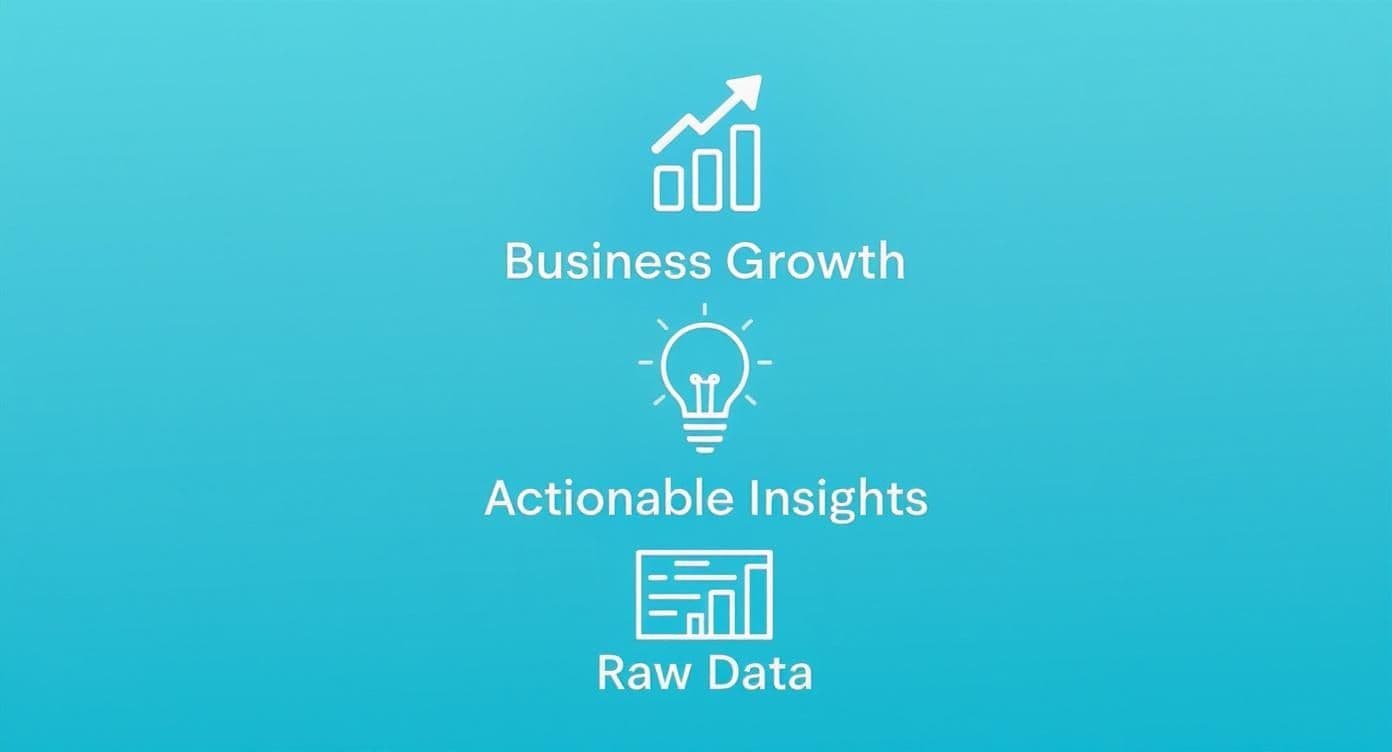
The report inspects different systems—traffic, visibility, technical health—to give a complete picture of what’s working and what needs attention. Each piece moves you from raw data to actionable strategy.
Traffic and Engagement Analysis
The first stop is organic traffic—people who find you via search engines rather than paid ads. Traffic shows whether your visibility is improving, but engagement metrics show if the traffic is valuable.
Key engagement metrics:
- Bounce rate: The share of visitors who leave after viewing a single page. A high bounce rate can signal a mismatch between query and content.
- Time on page: Longer times usually mean content is engaging and relevant.
- Pages per session: More pages per session indicates deeper user interest.
Use these metrics to judge whether content meets user intent. For a deeper overview of engagement metrics, see this guide from Hotjar: https://www.hotjar.com/blog/website-engagement-metrics/.
Search Visibility and Rankings
This section tracks where your pages appear in search results for priority keywords. Rank positions, impressions, and click-through rates reveal where you’re gaining ground and where opportunity exists.
Impression share is especially useful: it shows how often your site appeared versus the total possible impressions and helps uncover missed opportunities. Track rankings over time to see whether your strategy is moving the needle.
On average, organic search drives a large portion of site traffic; studies show organic channels often account for the majority of referral visits to websites2. When you tie ranking improvements to traffic and conversions, you can clearly demonstrate SEO’s business value.
Connecting SEO Metrics to Business Goals
Traffic and rankings are meaningful only when they connect to business outcomes. A strong report translates SEO wins into revenue, profit, and predictable growth.
From Clicks to Customers
Follow the user journey from an organic click to a conversion. A conversion can be a sale, demo request, newsletter signup, or any action with measurable business value. Tracking conversions lets you assign monetary value to SEO efforts and report on qualified leads and revenue rather than just visits.
Specialized calculators and valuation tools can help model the financial impact of organic traffic. Examples of practical tools you can use include the Business Valuation Estimator and the Digital Business Valuation Tool.
Calculating the True Value of SEO
After you know how many customers SEO brought in, model their lifetime value. That helps determine how much you can spend to acquire a customer and proves SEO is an investment, not a cost. When you present ROI in dollars and cents, budgeting conversations change and it becomes easier to expand SEO resources and prioritize the highest-impact work.
How to Squeeze Actionable Insights Out of Your SEO Data
A report full of charts is noise unless you transform the numbers into decisions. The best analysts constantly ask “why” behind every change. Understanding why something moved lets you take targeted action the following month.

Spotting Trends and Patterns
Zoom out and look for long-term trends rather than daily noise. Positive trends require diagnosis: are new posts gaining traction, or are older pages improving? Negative trends demand immediate investigation—check for recent algorithm updates, technical issues, or competitive content that outperformed yours.
Trends provide context. A single datapoint means little; a pattern over weeks or months tells the story.
Identifying Hidden Opportunities
Look for pages and keywords that are “almost there.” Keywords ranking in positions 11–20 are often the best low-effort wins—small on-page improvements or a few targeted links can push them onto page one.
Also watch pages with high rankings but low click-through rates. Those pages often just need a better title or meta description to capture more clicks. Quick tools like Google’s SERP preview or Yoast’s snippet preview can help you test alternatives.
Putting Your Reporting on Autopilot with Smart Tools
Manually pulling data from multiple platforms is time-consuming. Automation and dashboards free you to focus on strategy. Major platforms like Google Analytics and Ahrefs provide rich dashboards, and many teams automate reports with spreadsheet connectors or BI tools.
If you want to project growth without complicated formulas, simple calculators can help estimate future traffic using metrics like compound growth. For quick forecasting and business modeling, consider the Digital Business Valuation Tool.
The Rise of AI in SEO Reporting
AI is making reports more predictive and actionable. Instead of just flagging a dip in traffic, AI can help identify the competitor pages that outranked you and suggest content improvements. Many marketers report that AI tools speed up reporting and help surface high-impact actions4.
Common Questions About SEO Reports
How Often Should I Run an SEO Report?
Monthly reports are a practical default. They provide enough data to spot trends while avoiding noisy daily fluctuations.
- Weekly checks are useful right after a launch or during intense campaigns.
- Quarterly reviews suit mature sites and executive summaries.
The key is consistency so you can make fair comparisons over time.
What Is the Difference Between a Report and an Audit?
An SEO report is a recurring check-up that monitors progress over time. An SEO audit is a one-time, deep-dive diagnosis that uncovers issues and builds a roadmap for fixes. Reports show whether fixes are working; audits show what to fix.
Which SEO Metrics Are Just Vanity Metrics?
Vanity metrics look good but don’t explain business impact. Examples include:
- Total impressions without clicks
- #1 rankings for irrelevant keywords
- Traffic spikes from irrelevant geographies with high bounce rates
Prioritize metrics that tie to revenue: organic conversion rate, lead quality, and revenue from organic channels. Studies show inbound leads often convert at higher rates than outbound, which reinforces focusing on meaningful outcomes rather than surface-level wins1.
At MicroEstimates, we focus on turning complex data into simple, actionable tools. Instead of getting lost in spreadsheets, you can create and embed calculators that engage visitors and help prove marketing value. Try the Digital Business Valuation Tool to model the financial impact of leads and conversions on your business.
Quick Q&A
Q: What’s the single most important thing to look for in an SEO report? A: Track organic conversions and the pages that drive them—those tie SEO directly to revenue.
Q: How do I find the easiest wins? A: Look for keywords on page two and high-ranking pages with low CTR; these are high-impact, low-effort fixes.
Q: How do I prove SEO is worth the budget? A: Connect organic leads to revenue using conversion tracking and simple valuation tools so you can present clear ROI.
Bottom-line Q&A (Concise)
Q: What should I check first when I open an SEO report? A: Look at organic conversions and top pages by conversion volume.
Q: Where are the fastest wins? A: Improve titles/meta descriptions for pages with high impressions but low CTR, and optimize keywords ranking 11–20.
Q: How do I report value to executives? A: Translate leads into revenue using conversion rates and valuation tools like the Business Valuation Estimator.
1.
HubSpot, “Wskaźniki konwersji leadów przychodzących vs wychodzących,” https://blog.hubspot.com/marketing/inbound-vs-outbound
2.
BrightEdge research summarized in Search Engine Journal, “Organic Search Still Drives the Majority of Website Traffic,” https://www.searchenginejournal.com/brightedge-organic-search-statistics/
3.
SEOProfy, “SEO ROI Statistics,” https://seoprofy.com/blog/seo-roi-statistics/
4.
Search Engine Journal, “How AI Is Changing SEO Reporting,” https://www.searchenginejournal.com/ai-seo-tools/
Gotowy, aby zbudować własne narzędzia za darmo?
Dołącz do setek firm, które już używają niestandardowych narzędzi do szacowania, aby zwiększać zyski i zdobywać więcej klientów
✨ Kodowanie nie wymagane • 🚀 Gotowe w minuty • 💸 Tworzenie za darmo