Generating SEO leads means creating useful content and tools that match search intent and guide prospects from discovery to conversion. This guide covers keyword mapping, interactive assets, and on-page tactics to turn organic traffic into qualified leads.
December 9, 2025 (10mo ago) — last updated April 11, 2026 (6mo ago)
Generate SEO Leads: Practical Guide
Learn how to generate SEO leads with keyword intent, content optimization, interactive tools, and on-page conversion tactics to boost qualified traffic.
← Back to blog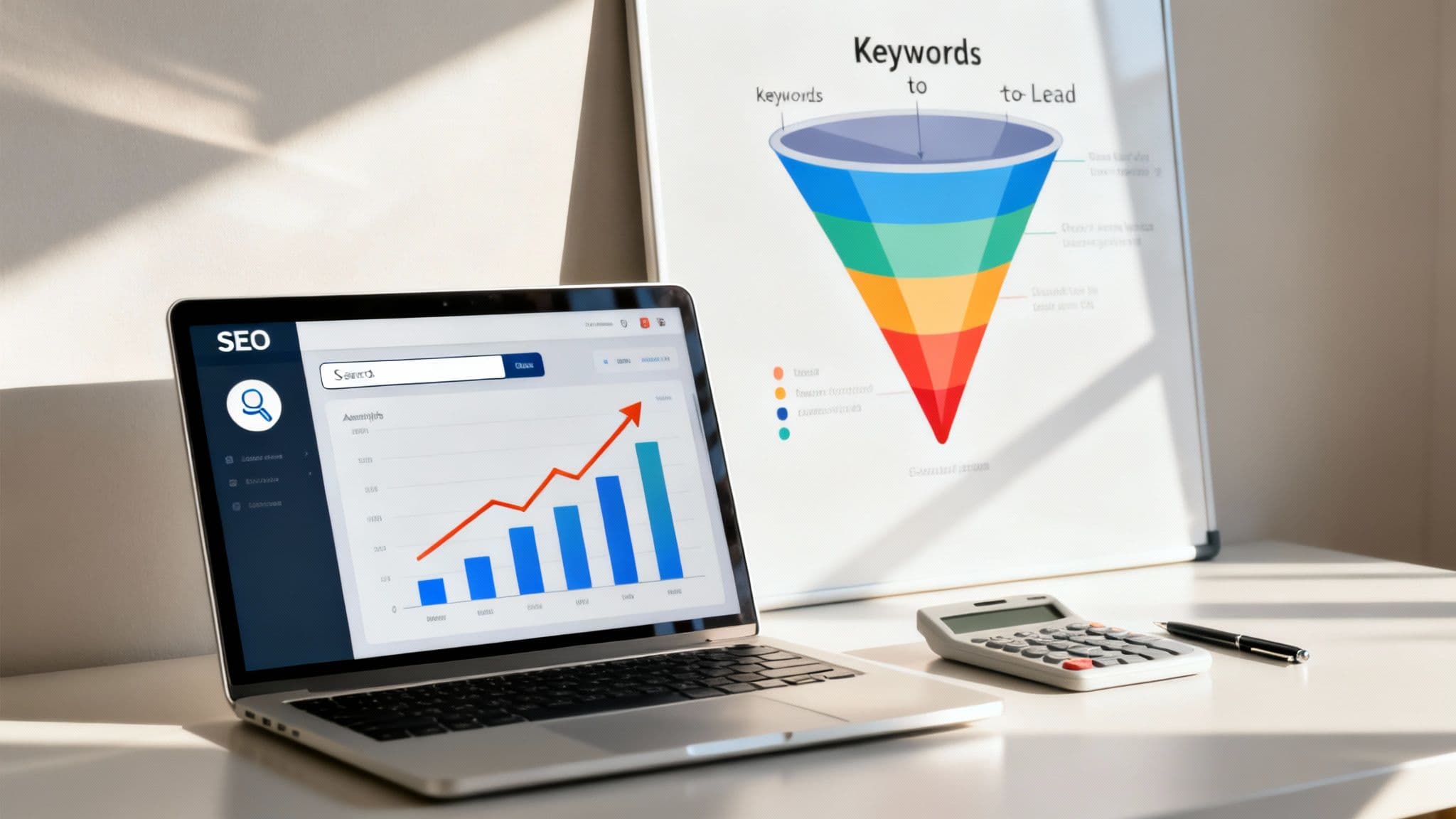
How to generate SEO leads: A Practical Guide to Boosting Your SEO
Discover how to generate SEO leads through targeted keyword intent, content that solves real problems, and on-page optimizations that turn visitors into qualified prospects.
Introduction
Generating SEO leads means creating genuinely useful content and tools that appear exactly when your ideal customer is searching for an answer. Target high-intent keywords, build assets that solve real problems, and make the path from search to contact simple and obvious.
Why SEO Leads Are a Game-Changer for Sustainable Growth
Many marketing channels can bring leads, but organic search delivers high-intent traffic with lasting value. Someone typing a problem into Google is actively seeking a solution—they’re already partway to a purchase. That proactive mindset makes SEO leads more likely to convert. Your job is to be the first credible answer they find.
The Unmatched ROI of Organic Leads
Data shows SEO leads close significantly better than many outbound tactics: organic inbound leads convert at higher rates, making SEO a reliable long-term investment rather than a short-term expense12.
From Tactic to Business Engine
Treat SEO as a business engine: each blog post, guide, and landing page becomes a 24/7 salesperson. Interactive tools are especially effective because they engage visitors, deliver immediate value, and pre-qualify prospects. Examples of tools you can embed include the Social Media Management Cost Estimator and the Mortgage Calculator.
“By focusing on search intent, you shift from interrupting potential customers to becoming their trusted solution.”
Building a Keyword Strategy That Attracts Buyers
A strong keyword strategy fuels your lead-generation engine, but it’s not just about high volume. Target keywords that signal buying intent—terms with words like “cost,” “calculator,” “service,” or “near me.” These show someone’s planning or ready to contact a provider.
Mapping Keywords to the Buyer Journey
Match your content to each stage of the buyer journey so you meet prospects with the right message:
| Buyer Stage | Keyword Intent | Example Keyword | Content Type |
|---|---|---|---|
| Problem-Aware | Informational | “signs of a leaking roof” | Blog post, checklist |
| Solution-Aware | Investigational | “roof repair vs replacement” | Comparison guide, webinar |
| Provider-Aware | Commercial / Transactional | “roofing contractor in Austin” | Service page, case study |
Creating content for every stage builds trust and positions you as the obvious choice when a prospect decides to buy.
Target Bottom-of-Funnel Keywords with Interactive Tools
Bottom-of-funnel keywords like “cost calculator” or “estimator” indicate clear purchase intent. Someone searching for “roof replacement cost calculator” is planning and budgeting—a perfect moment to capture a qualified lead. Embed tools such as the Square Footage Cost Estimator or the Home Renovation Budget Estimator to provide immediate value and collect contact details at the right moment.
Creating Content That Turns Visitors Into Leads
Traffic alone isn’t the goal—conversions are. Long, in-depth guides build authority, while interactive elements and lead magnets turn curious visitors into qualified contacts. Static content informs; interactive content engages and qualifies.
The Power of Embedded Tools
A well-written post with an embedded tool converts far better than the same post without one. For example, a marketing post with the Social Media Management Cost Estimator lets a reader input their numbers and get personalized results. In exchange for a short form or email, you convert a reader into a lead who’s signaled real interest.
“The most effective lead magnets don’t just promise value—they deliver it instantly.”
Build Lead Magnets Without Code
Ready-made platforms and widgets let marketers embed calculators and estimators without a heavy dev team. Examples that work by industry:
- Contractors: Home Renovation Budget Estimator to capture homeowners ready to talk numbers.
- Realtors: Mortgage Calculator to attract serious homebuyers and capture pre-qualified contacts.
- Agencies and SaaS: Email List Value Estimator to show potential ROI from lead lists and get signups.
Embedding the right tool aligns with the buyer’s needs at consideration and decision stages.
Designing Your Website for Maximum Lead Capture
Traffic is only half the battle. If your site isn’t built to convert, SEO wins don’t translate to business impact. Focus on conversion rate optimization so the user’s path from search to contact feels natural and low-friction.
Clear CTAs and Frictionless Forms
Use benefit-focused CTAs like “Get My Free Quote” or “Download the Report.” Keep forms brief—often a name and email are enough to start a conversation. Use smart fields and progressive profiling for returning visitors to reduce friction.
Someone who uses an embedded estimator is already engaged—they’ve seen value. A short form to get the full report converts far better than a long, intrusive form.
Build Trust Fast
You have seconds to prove legitimacy. Use testimonials, client logos, and case studies prominently. Make sure pages load quickly and work on mobile—slow pages push visitors away and kill conversions. Run your site through Google’s PageSpeed Insights to diagnose and fix issues4.
Getting Your Content in Front of the Right Eyeballs
Publishing great content isn’t enough. Earned links and targeted promotion amplify reach and build authority—backlinks remain a strong signal for search engines.
Interactive Tools as Linkable Assets
Useful tools are highly linkable. Financial blogs, news sites, and resource pages link to calculators and estimators that genuinely help readers. When you outreach, you’re offering value to editors and writers, not asking for favors.
Outreach That Works
Skip mass, impersonal outreach. Personalize each pitch, find the right editor, and explain why your tool complements a specific article. Use tools like Ahrefs or Semrush to find pages linking to similar resources and target them selectively.
Promoting a tool such as the Mortgage Calculator or the Business Valuation Estimator to niche publishers drives high-intent referral traffic that’s close to conversion3.
Your Top SEO Lead Gen Questions, Answered
How long until I see leads from SEO?
SEO is a long game. You may see initial traffic and a few leads in 3–4 months, but expect 6–12 months for a steady stream. Timelines depend on competition, site authority, and how consistently you publish and earn links.
What’s the difference between an MQL and an SQL in SEO?
A Marketing Qualified Lead (MQL) has shown interest—downloaded a guide or used a general tool. A Sales Qualified Lead (SQL) has taken a clear buying action—requested a demo or used a detailed calculator tied to your services. Use broad content to attract MQLs and targeted assets to convert SQLs.
Can I get SEO leads without a blog post?
Yes. Optimize service pages for commercial keywords, create location landing pages, or build interactive tools. A well-placed calculator often converts better than a blog post for bottom-of-funnel queries.
Quick Q&A (Concise Answers)
Q: What’s the fastest way to capture high-intent leads with SEO?
A: Build and promote interactive tools (calculators, estimators) that answer bottom-of-funnel questions and collect contact details when visitors request results.
Q: How should I prioritize content vs. tools?
A: Use content for top- and mid-funnel education and tools for consideration and decision stages. Both together guide prospects from discovery to purchase.
Q: Which metrics show SEO lead generation is working?
A: Track organic traffic quality, conversion rate from organic pages, MQL-to-SQL progression, and backlinks earned from targeted outreach.
1.
HubSpot, “Inbound vs. Outbound: Lead Close Rates,” https://blog.hubspot.com/marketing/inbound-vs-outbound-close-rates.
2.
HubSpot, “Marketing Statistics and Trends,” https://www.hubspot.com/marketing-statistics.
3.
Databox, “Lead Generation Statistics,” https://databox.com/lead-generation-statistics.
4.
Google PageSpeed Insights, https://pagespeed.web.dev/.
Prêt à créer vos propres outils gratuitement ?
Rejoignez des centaines d'entreprises qui utilisent déjà des outils d'estimation personnalisés pour augmenter les profits et gagner plus de clients
✨ Aucune programmation requise • 🚀 Prêt en minutes • 💸 Gratuit à créer