Discover what is white label software and how rebranding proven software can help you scale your business, boost authority, and improve SEO.
January 1, 2026 (5mo ago)
What Is White Label Software: Scale Your Brand with Rebranded Solutions
Discover what is white label software and how rebranding proven software can help you scale your business, boost authority, and improve SEO.
← Back to blog
What Is White Label Software: Scale Your Brand Fast
Discover what white label software is and how rebranding proven software helps you launch services faster, boost authority, and grow revenue.
Have you ever seen a small business or agency suddenly launch a sophisticated new software tool and wondered how they pulled it off without a huge development team? The secret is often white label software.
This is essentially a ready-made, market-tested product built by one company that other businesses can buy, rebrand, and sell as their very own. It’s a powerful shortcut to expanding your services without starting from square one.
Unlocking Growth with White Label Software

Think of it like a high-end bakery that supplies amazing, unmarked cakes to various local cafes. The bakery perfects the recipe, and each cafe puts its own logo, packaging, and unique spin on it. This model lets businesses offer proven solutions and create new revenue streams without the massive upfront cost and risk of building something from the ground up.
This isn’t a niche strategy anymore—white label and SaaS solutions are growing rapidly as businesses look to move faster and reduce development overhead1.
To give you a quick snapshot, here are the key features of this model.
White Label Software at a Glance
| Aspect | Description |
|---|---|
| Concept | A pre-built product sold by a provider to multiple resellers for rebranding. |
| Branding | The reseller applies their own brand, logo, and identity to the software. |
| Development | The original provider handles all development, maintenance, and updates. |
| Customization | Typically allows for cosmetic changes (branding) but not core feature alterations. |
| Goal | To quickly expand service offerings and generate new revenue. |
This table shows just how straightforward the arrangement is—you get a finished product ready for your brand’s touch.
Why It’s a Game-Changer
Using a white label strategy is about much more than just saving money on development. It’s a smart way to instantly deliver more value to your customers and solidify your brand’s authority in your field.
Here’s what that looks like in the real world:
- Enhance user engagement: By embedding a useful white label tool, you give people a compelling reason to stick around on your website. For example, a content agency could add a branded value tool like the YouTube Channel Value Estimator to provide immediate, tangible insights to visitors.
- Boost profitability: Interactive tools can become powerful sales assets. A construction firm embedding a cost estimator such as the Square Footage Cost Estimator can give potential clients faster quotes, shortening the sales cycle.
- Establish credibility: Offering a sophisticated tool instantly positions you as an expert. A consultant offering a branded Business Valuation Estimator looks more professional and prepared.
“White label software lets you focus on what you do best—serving clients—while leveraging proven technology that runs under your brand.”
To see how a ready-made solution functions in a specific industry, learn about white-label loyalty platforms and how providers build the foundation while resellers market and grow the product.
How Does a White Label Partnership Actually Work?
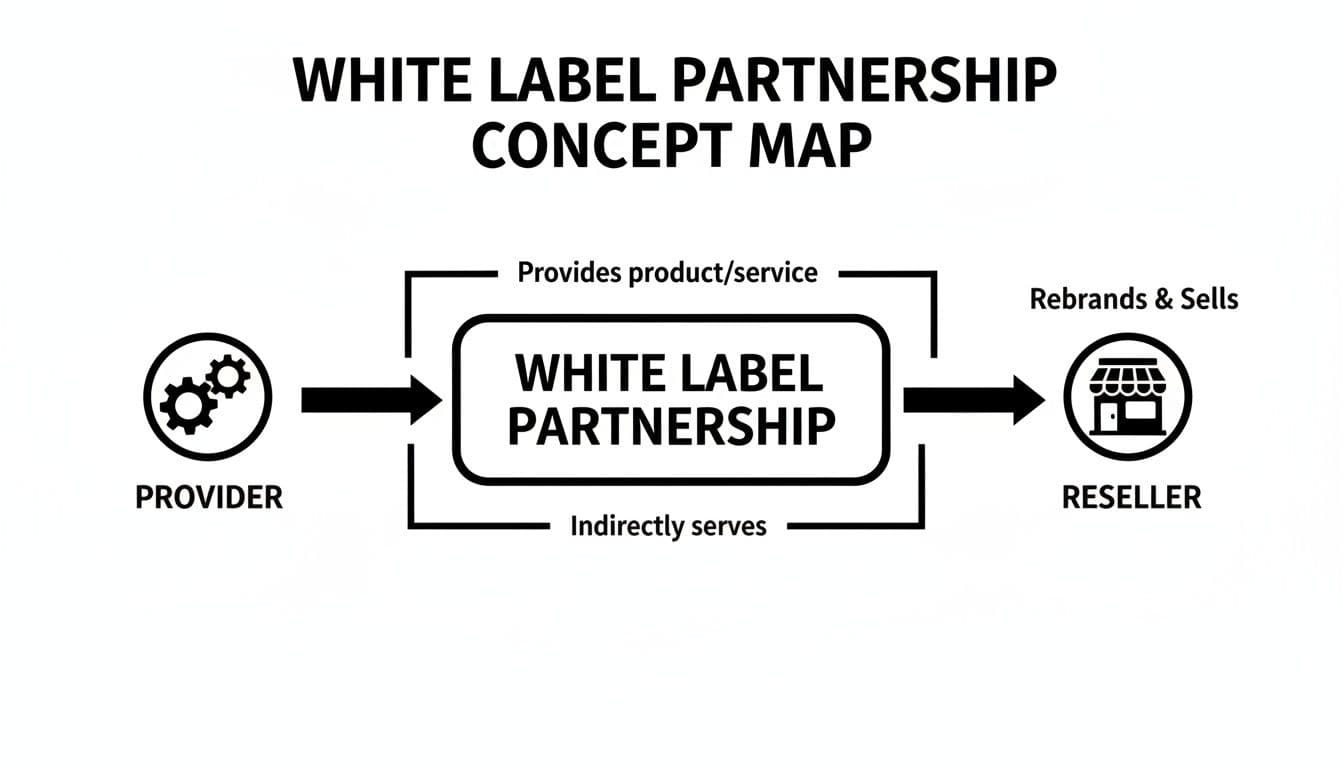
A white label partnership is really just a smart, strategic alliance. It’s built on a simple idea: one company builds great software, and another company brands and sells it.
Think of it like a craft brewery. The master brewer (the provider) has perfected an incredible IPA but doesn’t have a pub to sell it in. A local restaurant owner (the reseller) wants to offer a unique beer to their patrons but doesn’t have the equipment or expertise to brew it. They team up. The restaurant gets an exclusive, top-notch beer to sell under its own name, and the brewer gets their product into the hands of happy customers.
The Two Sides of the Coin
- The Provider (the builder): The tech company doing the heavy lifting—development, maintenance, security, and updates.
- The Reseller (the marketer): You. You brand the product, handle marketing and sales, and support your customers.
That clear division of labor is what makes this model work. You bring sophisticated tech to market without pulling people or money away from what you do best.
The Journey from Blank Slate to Branded Tool
- Finding the right partner: Vet providers for product-market fit, stability, and support.
- Making it your own: Customize logos, colors, and messaging.
- Going live: Embed the tool on your domain or a subdomain for a seamless experience.
For example, a marketing agency might embed a lead-generating tool such as the Email List Value Estimator and rebrand it as an ROI calculator. The agency doesn’t build the algorithm—they style and embed it, then use it as a lead magnet.
“The real win is when the user experience is so smooth that your customers never suspect a third party is involved.”
This model lets you streamline operations and focus on growth.
White Label vs Private Label vs Reseller Models
These terms are often used interchangeably, but they mean different things.
White label: A one-to-many model where multiple resellers brand the same product.
Private label: A one-to-one relationship where a provider builds a bespoke solution exclusively for a single brand.
Reseller: You sell the provider’s product under their brand without rebranding.
Private Label: A More Exclusive Arrangement
Private label delivers exclusivity and deep customization but comes with higher cost and longer time-to-market.
Reseller: The Simplest Path Forward
Reselling is fast to start and low-cost but offers little branding or margin control.
Comparing Key Partnership Models
| Feature | White Label | Private Label | Reseller |
|---|---|---|---|
| Branding control | High—you apply your brand. | Total—built for you. | None—you sell the provider’s brand. |
| Exclusivity | Low—others may sell the same core product. | High—exclusive to you. | Low—many distributors. |
| Customization | Low—mostly cosmetic. | High—features tailored. | None—sell as-is. |
| Upfront cost | Low to moderate. | Very high. | Very low or none. |
| Time-to-market | Fast. | Slow. | Immediate. |
There’s no single best option—choose based on budget, timeline, and strategic goals.
Choosing between these models affects pricing, positioning, and growth strategy. Explore pricing frameworks before you commit.
The Strategic Perks of Using White Label Solutions

The biggest wins are cost savings and speed to market. Building software from scratch demands large R&D budgets and ongoing maintenance. White label lets you skip that investment and launch services quickly.
Enhance Your Brand’s Authority and Credibility
Adding a professional tool under your brand sends a clear signal: you’re a complete solution. A simple branded tool can change how prospects perceive your business and help you win trust.
Using reliable, branded tools also supports operational scalability and client retention—customers value consistent, professional experiences.
Scale Your Business Without the Overhead
White label is an asset-light approach that helps you test new services with minimal risk. You can add revenue streams without hiring a large development team.
For example, a consultant could try a branded Business Valuation Estimator to gauge demand before investing in a full advisory division. A real estate agent embedding a Mortgage Calculator keeps buyers on their site and improves engagement during the decision process.
When you add a white label service, plan pricing carefully so the new offering is profitable over time.
How Businesses Use White Label Tools for Growth
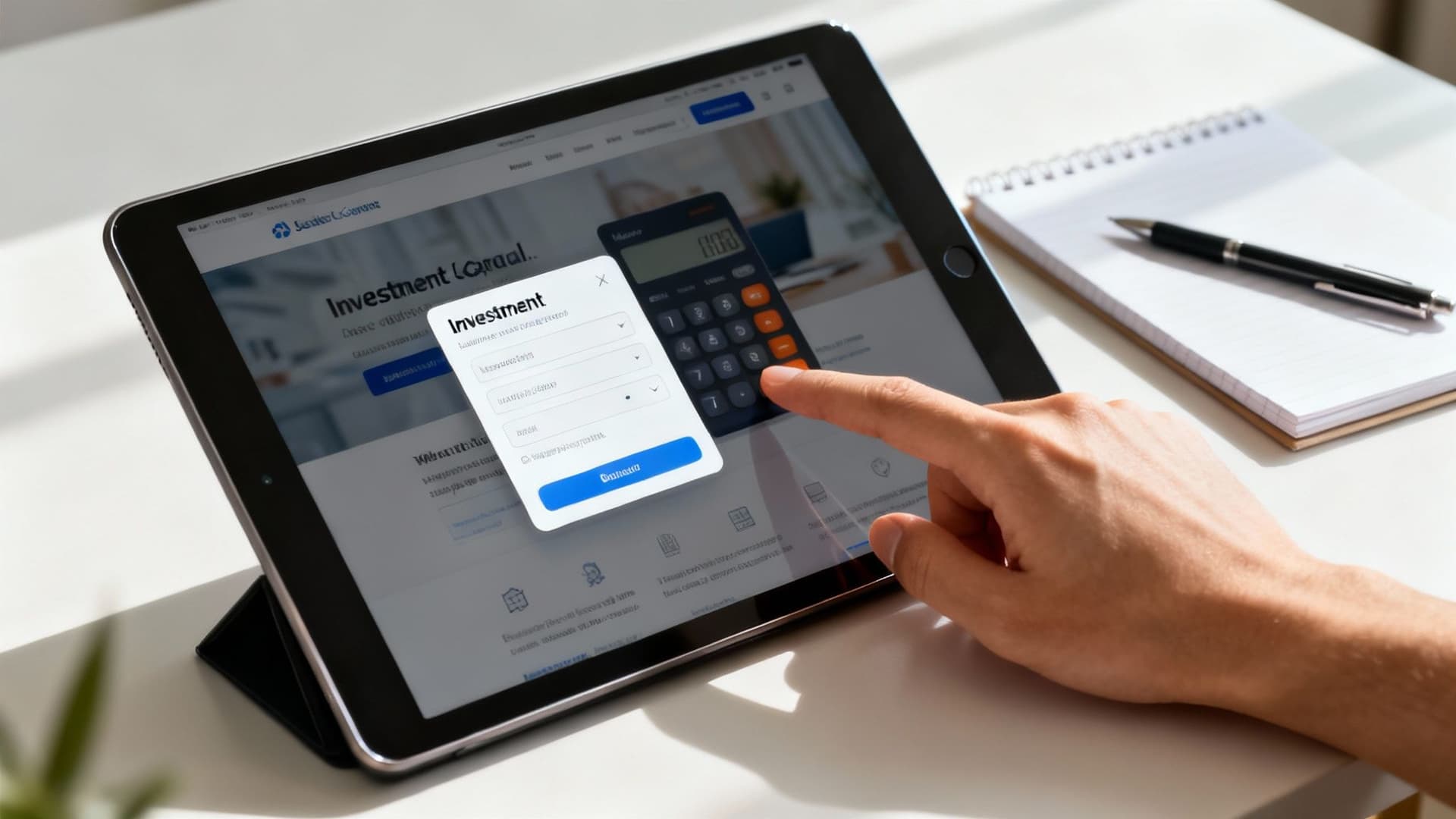
Smart businesses use white label tools to improve search rankings, increase conversions, and build loyalty.
Transforming Websites Into Interactive Hubs
Embedding tools turns static sites into useful resources. These tools serve multiple roles:
- Lead generation: capture contacts from interested prospects.
- User engagement: interactive tools increase time on page and signal value to search engines2.
- Brand authority: a useful, professional tool frames your brand as an expert.
This approach relies on reciprocity: give a visitor something useful, and they’re more likely to trust you and convert.
Real-World Examples of White Label Success
A financial advisor could embed a branded Business Valuation Estimator to start conversations with clients using real numbers. A marketing agency might offer an Email List Value Estimator to capture leads and demonstrate ROI.
In real estate, offering a Mortgage Calculator on listing pages keeps buyers on your site and strengthens conversion opportunities.
These tools don’t just sit on a page—they actively attract, engage, and convert visitors into paying customers.
Choosing the Right White Label Partner
Your partner choice determines the experience you sell. A great product plus reliable support equals a sustainable offering under your brand.
Start by validating the product. A shaky core product means trouble for your brand.
Evaluating Potential Providers
When vetting providers, check:
- Software quality and stability: Use demos or trials to test performance and UX.
- Technical support: Confirm SLAs and response times.
- Customization and branding options: Ensure you can match your site’s look and feel.
Understanding the Fine Print
Before you sign, understand pricing models—flat fees, per-user costs, or revenue sharing—and pick what aligns with your plan. Define your product requirements up front so you can evaluate fit precisely.
Global SaaS adoption continues to expand, making partner selection more strategic than ever1.
Got Questions? We’ve Got Answers
Is white labeling legal and ethical?
Yes. White labeling is a standard business arrangement governed by clear contracts that define licensing, support, and responsibilities.
How much can I change the software?
It depends on the provider. Some allow only cosmetic changes; others provide APIs or deeper integration options. Always confirm customization limits before signing.
What are the biggest downsides?
You rely on the provider for updates, security, and feature development. If they stop supporting the product, your service could be affected. Avoid this by choosing reputable partners and focusing on differentiators you control: branding, service, and marketing.
Frequently Asked Questions (Q&A)
Q: What’s the main benefit of white label software?
A: The main benefit is speed to market—launch branded, proven tools quickly without building from scratch, letting you focus on sales and customer experience.
Q: How does white label software help SEO?
A: Embedded, useful tools increase time on page and often attract backlinks, making the pages that host them stronger candidates for organic ranking2.
Q: How do I pick a reliable provider?
A: Look for product stability, solid support SLAs, clear customization options, transparent pricing, and references from current resellers.
Start exploring white label tools by testing a few relevant calculators for your audience, such as the Business Valuation Estimator or the Mortgage Calculator. These practical tools can become cornerstones of your marketing and sales funnel.
1.
Statista, “Software as a Service (SaaS) — statistics & facts,” https://www.statista.com/topics/3114/software-as-a-service-saas/.
2.
Moz, “Dwell Time and SEO: What You Need to Know,” https://moz.com/learn/seo/dwell-time; Backlinko, “Content Marketing and Link Building,” https://backlinko.com/content-marketing.
Ready to Build Your Own Tools for Free?
Join hundreds of businesses already using custom estimation tools to increase profits and win more clients
✨ No coding required • 🚀 Ready in minutes • 💸 Free to create