Finding low-competition keywords is one of the fastest ways to get meaningful organic traffic without competing with industry giants. This guide lays out a practical roadmap, core metrics, tools, and step-by-step tactics so you can identify and validate long-tail, high-intent phrases that convert.
November 19, 2025 (11mo ago) — last updated December 13, 2025 (10mo ago)
Low-Competition Keywords to Drive Targeted Traffic
Discover how to find low-competition, high-intent keywords using proven tools and tactics to drive targeted organic traffic and faster rankings.
← Back to blog
Find Low-Competition Keywords That Drive Traffic
Summary: Learn how to find low-competition keywords with proven strategies and tools to drive targeted traffic and boost SEO rankings.
Introduction: Finding low-competition keywords is one of the fastest ways to get meaningful organic traffic without competing with industry giants. This guide lays out a practical roadmap, core metrics, tools, and step-by-step tactics so you can identify and validate long-tail, high-intent phrases that convert.
Finding Low-Competition Keywords Roadmap
Zeroing in on low-competition keywords can feel like uncovering hidden treasure. Aim for phrases that draw 100–1,000 searches each month and sit below a 30 difficulty score; those targets often deliver quicker wins than broad, contested terms1.

A niche skincare blog I worked with found a keyword with 150 monthly searches and a 21 difficulty rating—and reached page one in under four weeks.
To replicate that success, use these filters and practices:
- Search volume: 100–1,000 monthly searches.
- Difficulty score: prioritize anything under 30.
- Long-tail specificity: the more precise the phrase, the less crowded the field.
- Tool selection: start with free tools, then validate with one paid platform or a manual SERP audit.
Why long-tail matters
Head terms attract heavy competition; long-tail phrases make up most search queries and often convert better. Smaller sites can capture meaningful traffic by prioritizing specificity over raw volume2.
| Keyword Type | Search Volume Share | Competition Level |
|---|---|---|
| Head Term | 30% | High |
| Long-Tail Phrase | 70% | Low |
Core metrics explained
Focus on these metrics: search volume, difficulty, intent alignment, and the volume-to-difficulty ratio. Don’t treat difficulty as absolute—adjust your target based on domain age and backlink profile. When comparing competitors, run a quick domain check and prioritize keywords that match clear user intent3.
Skincare blog case study
The skincare example began with a manual SERP audit and a short list of long-tail phrases. A competitive gap review found related questions and subtopics to include. The result: a fast climb to page one and steady traffic growth.
Try combining these steps in your workflow:
- Seed topic ideas and expand with related searches and People Also Ask results.
- Run a SERP audit to check format, snippet presence, and competitor strength.
- Prioritize long-tail phrases with clear purchase or informational intent.
Pro tips for fast wins
- Focus on a single niche to keep efforts concentrated.
- Refresh research every 60–90 days—trends change fast.
- Replace stale keywords with fresh variants before rivals notice.
By leaning into smaller, high-intent phrases, you’ll set a foundation for organic growth without directly battling industry giants1.
Next steps for keyword hunting
List core topics, expand them into long-tail variants, then filter by volume and difficulty. Flag the most specific phrases for your content calendar and build outlines that match the top-ranking formats you observed in SERP audits.
Understanding Keyword Competition Landscape
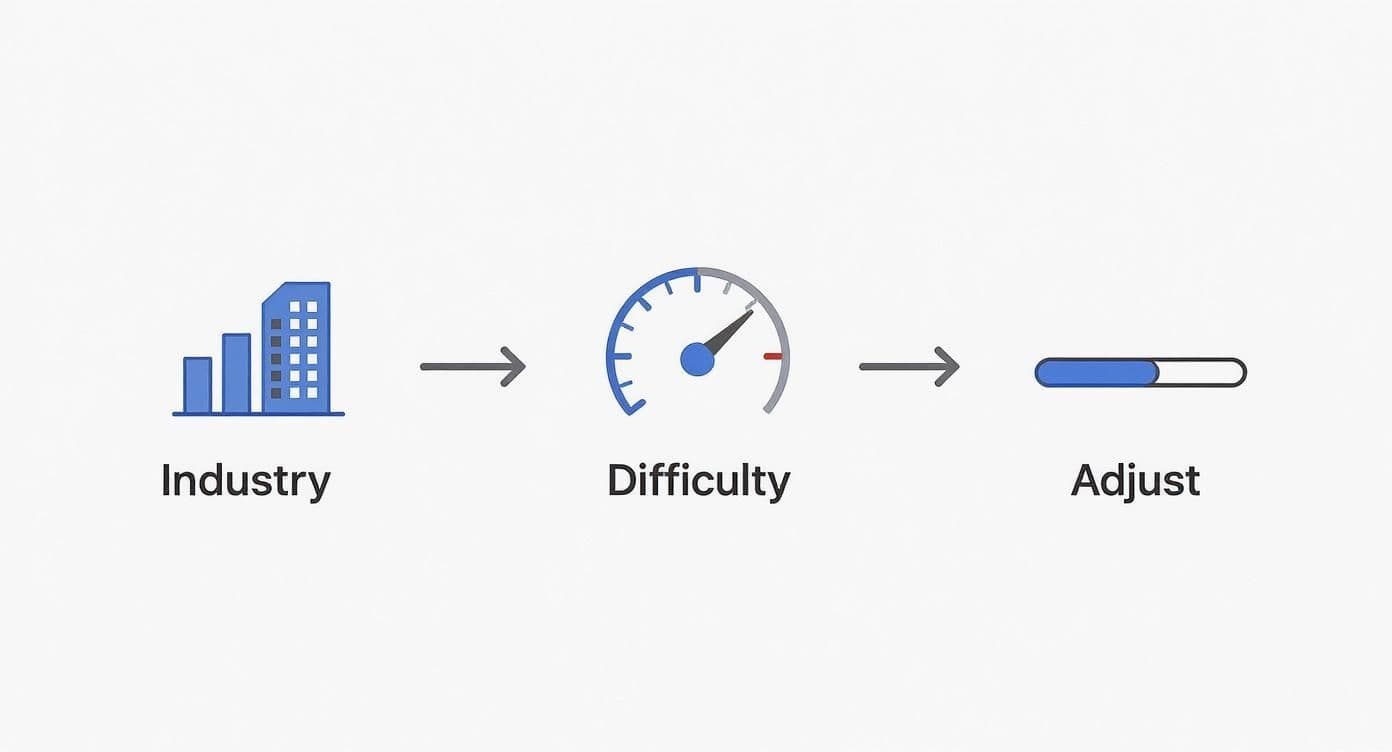
Keyword competition shifts with industry dynamics and intent. Broad verticals like finance are often guarded by high-authority sites, while local niches and hobby topics show more opportunity. Use industry benchmarks as a starting point, not a rule set4.
Interpreting difficulty scores
Difficulty scores should guide rather than dictate your strategy. If your site has solid backlinks, you can pursue moderately harder terms. If you’re new, stay under a 30 difficulty target and focus on topical depth.
When evaluating competitors, compare domain strength and the content formats that rank—how-to guides, product pages, tutorials, or listicles—and match that format in your outline.
Industry competition variations
| Industry | Average Difficulty | Typical Backlink Range |
|---|---|---|
| SaaS | 28 | 50–100 |
| Local Services | 22 | 10–30 |
| Finance | 42 | 200–500 |
You’ll often find easier opportunities in local services and niche ecommerce. Balance automated metrics with hands-on SERP reviews to avoid surprises.
Tactical takeaways
- Aim for difficulty under 30 when launching a new site.
- Cross-reference backlink data from Moz or Ahrefs for validation.
- Pair SERP audits with keyword scans and refresh content regularly.
Small dips in difficulty can unlock quick page-one wins. Shifting from head terms to clustered subtopics reveals opportunities you can rank for within weeks.
Tools and Techniques to Find Low-Competition Keywords
Start with free tools and add paid platforms for validation. Google Keyword Planner and Google Trends are indispensable for initial filtering and seasonality checks.
Google Trends validation
- Compare terms side by side to gauge relative popularity over 12 months.
- Identify seasonal peaks and plan content accordingly.
- Narrow to regions that match your audience demand5.
My recommendation: target keywords that show steady interest on Trends and have a difficulty score under 25 when validated with another tool.
Keyword Planner and manual checks
- Focus on keywords with 100–1,000 monthly searches to avoid highly contested head terms.
- Use exported lists to remove duplicates and prioritize long-tail variants.
- Complement Planner data with manual SERP audits to gauge intent.
Competitive gap and discovery
Look for keywords your competitors haven’t covered in depth. People Also Ask boxes, related searches, and forum threads often reveal question-driven queries you can own quickly.
Use weekly alerts from a discovery tool or saved searches in Google to spot rising long-tail topics before they get crowded.
Backlink and rank monitoring
Check competitor backlinks and track your rankings after publishing. For domain comparisons, consider running a valuation or domain check to help prioritize opportunities—this contextualizes the difficulty score against real-world authority. For example, use the Domain Name Value Estimator to get a quick sense of a competitor domain’s market value and historical signals.
Practical workflow
- Seed ideas in Keyword Planner and Trends.
- Manually audit the top 10 results for intent and format.
- Validate difficulty and volume with a paid tool or deeper manual checks.
- Run micro-campaign tests for high-potential phrases before scaling.
Evaluating and Validating Keyword Potential
When vetting a shortlist, focus on intent, CTR potential, and the volume-to-difficulty ratio. These metrics separate promising phrases from distractions.
SERP analysis best practices
Study top-ranking pages and mirror the content format—if they use tutorials, lists, or product comparisons, match that structure while adding fresher examples or updated data.
Watch for featured snippets and People Also Ask boxes; answering those questions directly can increase CTR and visibility.
Using People Also Ask and related searches
Pull PAA questions into subheadings, scan related searches for fresh angles, and monitor social threads for real-time topic signals. These additions often lift engagement and click-through rates.
Validating with metrics and thresholds
A simple filter is the volume-to-difficulty ratio: anything above 3 usually signals healthy traffic potential without overwhelming effort. Track intent alignment, CTR projection, volume-to-difficulty, and competitor domain strength.
| Metric | Purpose | Recommended Threshold |
|---|---|---|
| Intent Alignment | Ensure content matches search goals | ≥ 80% |
| CTR Projection | Estimate click rates from SERP features | ≥ 30% |
| Volume-to-Difficulty | Balance traffic potential with effort | Ratio ≥ 3 |
| Domain Authority Check | Compare competitor strength | DA ≤ 50 |
| Social Signal Audit | Confirm genuine user interest | Any mentions |
Testing keywords in small batches
Before writing many articles, run a micro-campaign: a small ad or social headline test with each keyword. Measure clicks, bounce rate, and time on page to confirm real interest.
When tests validate a term, cluster those keywords into topic silos for faster, compounding gains.
Integrating Keywords Into Your Content Strategy
Finding low-competition keywords is only the start. Cluster them into topic silos so each article feeds a central hub. That helps readers and search engines see your topical authority.

We mapped silos on a shared board and arranged internal links so every supporting post pointed back to its main hub. That lifted conversions for a B2B client by 22%.
A living editorial calendar keeps deadlines and priorities clear. Pull clicks and average position from Search Console to decide which posts need updates.
- Assign publish dates and primary keywords.
- Pull GSC data for impressions and average position.
- Export the calendar to CSV for backups.
Creating topic silos
Group related long-tail phrases around a core idea. Aim for 800–1,200 words for hub pages and 500–700 words for supporting posts. Internal linking and clear content hierarchy help crawlers and readers.
| Page Type | Role | Keyword Focus |
|---|---|---|
| Silo Landing Page | Central overview | find low-competition keywords |
| Supporting Article | Deep examples and tactics | niche tools and actionable steps |
Monitoring and iteration
After publishing, monitor clicks, impressions, and ranking trends. Refresh underperformers with new data, case studies, or improved internal links. Merge or expand posts that overlap too much.
Use domain checks and periodic backlink audits to validate progress and adjust difficulty targets over time.
Frequently Asked Questions
How do I measure keyword difficulty?
Mix volume-to-difficulty ratios with a quick SERP scan. If top-ranking pages have lower domain strength than yours, that’s a green light. Track search volume, difficulty score, and the volume-to-difficulty ratio when prioritizing terms.
Which free tools uncover low-competition phrases?
Start with Google Keyword Planner and Google Trends for seasonality. Combine those with manual SERP audits and People Also Ask checks to surface question-driven queries.
How often should I refresh research?
Refresh keyword research every 60–90 days. Set alerts for rising queries so you can swap in fresh terms before they get crowded.
Q&A: Quick answers to common keyword-hunting questions
Q: What search volume should I target for fast wins?
A: Aim for 100–1,000 monthly searches and a difficulty score under 30 when starting out.
Q: How do I validate a keyword before writing?
A: Run a SERP audit, check intent alignment, and test with a small ad or social headline for a week.
Q: When should I aim for harder keywords?
A: Once you have steady backlinks and consistent traffic, increase difficulty targets and expand hubs.
Concise Q&A Summary
Q: How do I find low-competition keywords quickly?
A: Seed ideas from your core topics, expand with related searches and PAA, filter for 100–1,000 searches and difficulty <30, then run a quick SERP audit.
Q: Which metrics matter most?
A: Intent alignment, volume-to-difficulty ratio, and competitor domain strength.
Q: What’s a low-risk way to test keywords?
A: Run micro-campaigns (small ads or social tests) and measure clicks and engagement before scaling.
1.
Semrush: Keyword competition and difficulty insights. https://www.semrush.com/blog/keyword-competition/
2.
SearchAtlas: Long-tail keyword traffic patterns and SEO statistics. https://searchatlas.com/blog/seo-statistics/
3.
PimpMySaaS: How to increase website traffic organically. https://www.pimpmysaas.com/blog/how-to-increase-website-traffic-organically
4.
Semrush 2025 analysis referenced for industry difficulty variation. https://www.semrush.com/blog/keyword-competition/
5.
Google Trends for seasonality checks. https://trends.google.com
6.
Domain Name Value Estimator: quick domain checks and historical signals. Domain Name Value Estimator
Ready to Build Your Own Tools for Free?
Join hundreds of businesses already using custom estimation tools to increase profits and win more clients
✨ No coding required • 🚀 Ready in minutes • 💸 Free to create