Cost-plus contracts reimburse real project costs plus an agreed contractor fee. When paired with open-book reporting, clear incentives, and strong budget controls, they reduce disputes, accelerate decisions, and protect quality on custom homes and complex renovations.
August 3, 2025 (1y ago) — last updated November 3, 2025 (10mo ago)
Cost-Plus Contracts: Guide for Owners & Builders
Practical cost-plus contract guide: fees, incentives, reporting, GMPs, and controls to manage costs, reduce risk, and increase transparency.
← Back to blog
Cost-Plus Contracts: Owner & Builder Guide
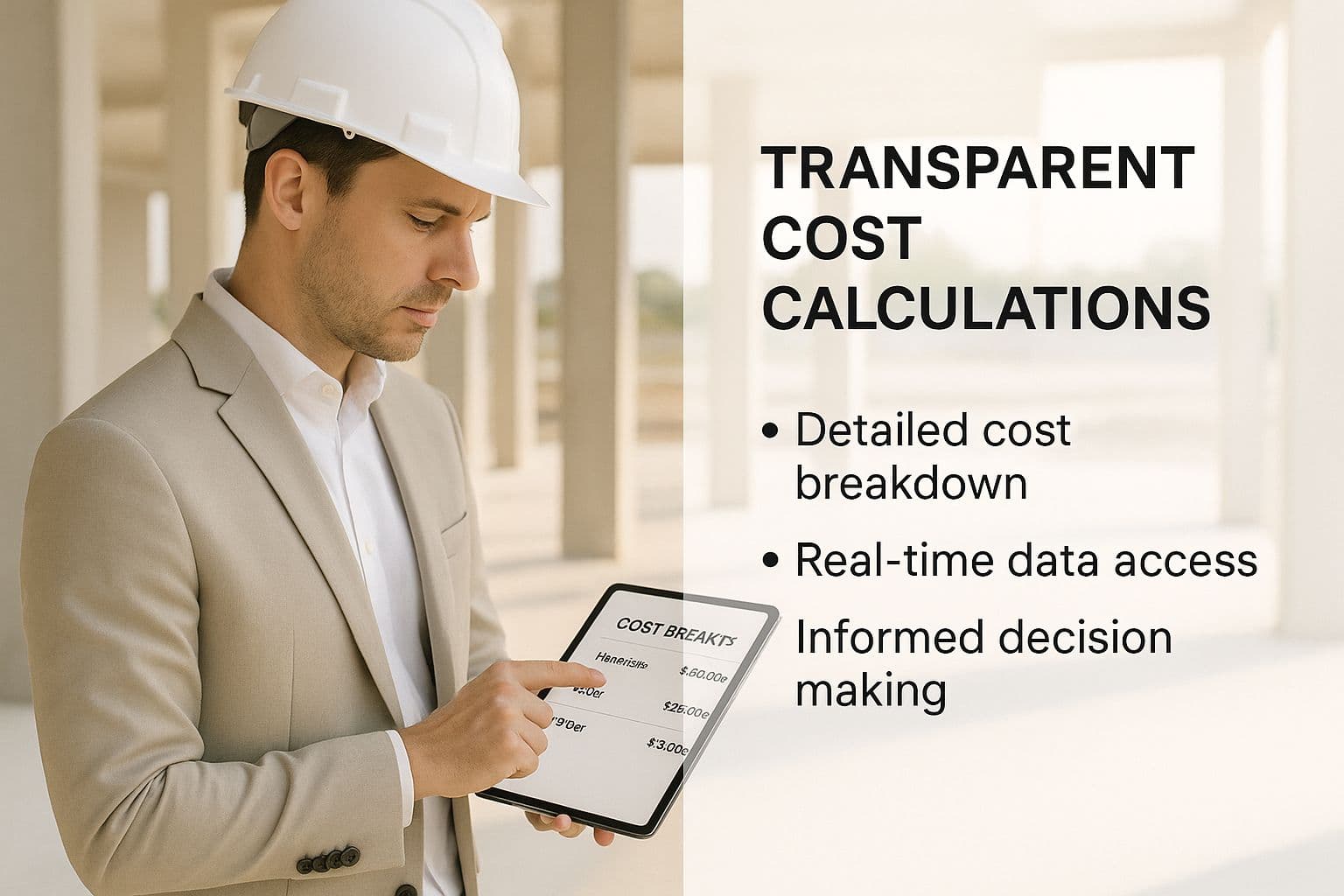
Cost-plus contracts let owners reimburse actual project costs — materials, labor, and subcontractors — plus an agreed contractor fee. With open-book reporting, clear incentives, and strong budget controls, cost-plus can reduce disputes, speed decisions, and protect quality on custom homes and complex renovations.
What is a cost-plus building contract?
A cost-plus contract is an open-book agreement where the owner reimburses allowable project expenses — materials, labor, subcontractors, equipment — and pays an agreed fee to the contractor for overhead and profit. Instead of a fixed lump sum, the owner sees actual costs plus a “plus” fee.
Why parties choose cost-plus:
- It’s best for projects with uncertain scope or unknown site conditions
- It makes mid-project upgrades or design changes simpler because costs are transparent
- It can encourage quality when contractor profit isn’t tied to cutting materials or labor
How does a cost-plus contract work in practice?
Think of it like hiring a personal chef: you buy the ingredients and pay the chef separately for time and skill. The contract should require open-book accounting, frequent reporting, and explicit audit rights so the owner can verify invoices and timesheets.
Key elements owners should expect:
- Itemized, reimbursable expenses (material invoices, subcontractor bills, labor timesheets, equipment rentals)
- A clear fee structure for contractor overhead and profit
- Reporting cadence (weekly or biweekly recommended) and audit/access rights
What fee structures are common and when should each be used?
Cost Plus Fixed Fee (CPFF)
- Fee: A lump-sum amount agreed up front
- Benefit: Predictable contractor profit, lower incentive to inflate costs
- Downsides: Scope changes still require negotiation
- Best when: Owners want flexibility but predictable contractor compensation
Cost Plus Percentage of Cost
- Fee: A percentage of total project cost (for example, 10–20%)
- Benefit: Flexible when scope is unclear
- Downsides: Contractor earns more if costs rise, so it requires high trust and transparency
- Best when: Scope is highly uncertain and owner trusts contractor transparency
Cost Plus Incentive Fee (CPIF)
- Fee: Reimbursement plus incentives for savings versus a target cost
- Benefit: Aligns contractor incentives with budget efficiency
- Downsides: Targets must be realistic and measurable
- Best when: Both parties can agree on and measure a fair target cost
Cost Plus Award Fee (CPAF)
- Fee: Reimbursement plus an award tied to qualitative targets like quality, schedule, or safety
- Benefit: Rewards performance beyond cost control
- Downsides: Awards can feel subjective without clear metrics
- Best when: Quality and schedule are critical and measurable
How do the fee types compare at a glance?
| Contract Type | Fee Structure | Main Benefit | Owner Risk |
|---|---|---|---|
| Cost Plus Fixed Fee | Lump-sum fee | Predictable contractor profit | Scope-change negotiation needed |
| Cost Plus Percentage | Percentage of costs | Flexible for uncertain scope | Incentivizes higher spending |
| Cost Plus Incentive | Base fee + shared savings | Encourages efficiency | Requires accurate target cost |
| Cost Plus Award | Base fee + performance award | Motivates quality and timeliness | Metrics may be subjective |
Strategic advantages of cost-plus contracts
When structured and managed well, cost-plus contracts provide:
- Transparency: Open-book accounting reduces disputes and builds trust
- Flexibility: Design changes and upgrades can be implemented quickly
- Quality focus: Profit separated from material and labor choices reduces pressure to cut corners, especially when incentives are aligned
How do owners limit financial risk and align incentives?
Practical controls to include in the contract:
- Negotiate a guaranteed maximum price (GMP)
A GMP sets a hard ceiling. The contractor covers overruns beyond that cap, aligning incentives while keeping open-book visibility.
- Require rigorous reporting and audit rights
- Contractually require frequent cost reports (weekly or biweekly) with itemized line items
- Include audit rights so the owner or an appointed representative can review invoices, receipts, and timesheets
- Add an open-book clause guaranteeing access to financial records
- Use estimating and fee tools to validate budgets
Use trusted tools to sanity-check contractor fees and line-item budgets. Shared tools reduce skepticism and support data-driven discussions. Useful tools:
- Construction Material Cost Predictor
- Square Footage Cost Estimator
- Architectural Design Fee Estimator
- Include aligned incentives
- Use CPIF or CPAF structures to reward savings, schedule milestones, or quality outcomes
- Define clear targets, measurement methods, and reporting intervals to avoid disputes
How do I protect my budget with accurate estimating?
A detailed, line-by-line initial estimate prevents cost creep and sets expectations. Key items to estimate:
- Material quantities and unit costs (for example, lumber board feet)
- Labor hours and hourly rates per crew
- Subcontractor proposals and allowances
- Equipment rental and specialized tools
Using a shared estimating platform gives both parties a common baseline for decisions. See the estimating guide for owners at Estimating Best Practices and our tools page for calculators.
How should I handle market volatility in a cost-plus contract?
In volatile markets, fixed-price contracts transfer risk to contractors who must guess future costs. Cost-plus contracts pass transparent, actual cost changes through to the owner. To manage volatility:
- Build a contingency fund (typically 5–15% of the estimated cost)
- Pre-order long-lead items to lock pricing where practical
- Add escalation clauses that define how material price increases are handled
Industry data: global construction costs rose on average 4.6% in 2023, with regional variance1. For regional labor and materials trends, consult national sources such as the U.S. Bureau of Labor Statistics2.
Frequently asked questions (quick answers)
Are cost-plus contracts only for large commercial jobs?
No. They work for many sizes and types of projects: historic renovations, custom homes, complex retrofits, and any job with meaningful uncertainty.
How do I stop a contractor from overspending?
Choose the right fee model (CPFF or a GMP), require frequent itemized reporting, secure audit rights, and use incentives that reward efficiency such as CPIF.
What paperwork should a builder provide?
Itemized material invoices, subcontractor bills, labor timesheets, receipts, periodic summary reports, and access to supporting documents via a shared platform.
Is cost-plus better than fixed price?
Neither is universally better. Fixed-price gives budget certainty when scope is fixed. Cost-plus gives flexibility and can improve quality when scope or conditions are uncertain.
What should an owner check before signing?
- Choose a fee model that fits your risk tolerance (Fixed fee, Percentage, CPIF, CPAF)
- Require an open-book policy and explicit audit rights
- Negotiate a GMP if you want a hard cost cap
- Insist on frequent, itemized cost reporting
- Use estimating tools to set a realistic baseline
- Define contingency, escalation, and incentive clauses clearly
- Document dispute resolution steps and a clear change-order process
Recommended next steps and resources
A well-structured cost-plus contract can deliver flexibility, transparency, and higher quality, provided you pair it with safeguards: a clear fee structure, frequent reporting, GMP or incentives where appropriate, and accurate estimating tools.
Recommended resources:
- Construction Material Cost Predictor
- Square Footage Cost Estimator
- Architectural Design Fee Estimator
- Estimating guide for owners: Estimating Best Practices
- Need personalized help? Contact our experts at Contact
Additional internal links
- Link to tools near references to calculators and shared estimating platforms
- Link to Estimating Best Practices wherever “estimating” or “detailed estimate” appears
- Link to Contact in calls to action for tailored guidance
- Link to About near any author or company background mentions
Quick Q&A: Owners’ top concerns
Q: How quickly will I see costs and invoices? A: Require weekly or biweekly itemized reports and real-time access to invoices and timesheets via a shared platform.
Q: What’s the simplest way to cap spending? A: Negotiate a guaranteed maximum price so the contractor is responsible for overruns above the cap.
Q: How can I reward efficiency without limiting quality? A: Use a Cost Plus Incentive Fee or Award Fee structure with clear, measurable targets and reporting.
Bottom-line Q&A — 3 key questions
Q: When should I pick cost-plus over fixed price? A: Choose cost-plus when scope, site conditions, or design are uncertain and you value transparency and flexibility.
Q: How do I keep a contractor from earning by increasing costs? A: Use a fixed fee or GMP, require open-book reporting and audit rights, and add incentives that share savings.
Q: What reporting and tools help the most? A: Weekly or biweekly itemized reports, a shared estimating platform, and sanity checks using trusted cost tools like the Construction Material Cost Predictor.
Ready to Build Your Own Tools for Free?
Join hundreds of businesses already using custom estimation tools to increase profits and win more clients
✨ No coding required • 🚀 Ready in minutes • 💸 Free to create